Challenge the Way We Think

I came across a quote from Stephen Sondheim that I really liked:

“If people have split views about your work, I think it’s flattering. I’d rather have them feel something about it than dismiss it.”

So true, so true…  I think all art—be it writing, painting, sculpture, music—should challenge people and make them think.

Posted in Inspiration, Writing | Tagged | 1 Comment

Religion and the Decline of Science Fiction

One of the things I like about my writing group, Hopefull Monsters, is we often engage in philosophical discussions about the state of speculative fiction.  Recently we had a wide-ranging discussion about the apparent decline in the number of the people who read speculative fiction, and more specifically science fiction.  Fellow Monster Richard Zwicker made an observation that at conference panel he had attended, the question about religion and speculative fiction came up, and after a quick poll, no one in attendance considered himself or herself religious.  Given that speculative fiction is generally viewed as “anti-religion” (with the exception of a few notable works), this immediately raised the question: Has religion contributed to shrinking readership?

This is an interesting question without an easy answer because the apparent decline in the number of speculative fiction readers, and specifically science fiction readers, is probably related to numerous factors, e.g., the rise in other easily accessible media.  Yet science fiction has always had a reputation for being “anti-religion”—true or not doesn’t matter because perception is, in a sense, reality—so perhaps there is something to this.  In order to support the hypothesis that religion has contributed directly to the decreasing number of science fiction readers, we must understand the status of religion.  If there has been no change in the status of religion in the general population, then declines in readership over that same time period are likely not directly associated with religion itself.

Anyone casually looking at American* politics and media might conclude that religion is on the rise.  Over the past decade, the “religious right” has risen to a level where it wields considerable political power within the country.  If this conclusion is true, then declining readership for science fiction (science is a popular whipping boy of the “religious right”) could be related to its “anti-religion” reputation**.  

However, a recent study by a Dr. Mark Chaves of Duke University, suggests that religion is actually on a downward trend in America.  In his paper “The Decline of American Religion?” Dr. Chaves notes that all accepted measures of religion are either stable or have declined in America over the past four decades.  As with all scientific studies, the devil (so to speak) is in the details, and Dr. Chaves finds that things like belief in god, heaven and hell, and reading the Bible haven’t changed significantly in America.  What has changed are things like a person’s association with a specific religious affiliation, church attendance, and confidence in church leadership.  I find this interesting because it appears that belief in religious teachings has remained relatively stable, while participation in organized religious structures (i.e., churches, temples, etc.) has declined.  While more people appear to be “spiritual, but not religious,” Dr. Chaves concluded that this “should not be mistaken for an increase in traditional religiosity” and that “every indicator of traditional religiosity is either stable or declining.”

So what does all this mean for science fiction readership?  These data suggest that religion is not significant contributor to declining readership.  Declining readership is not restricted to science fiction alone, but is a trend across all fiction (see the study “Reading at Risk” by the National Endowment of the Arts).  Whether science fiction has been harder hit than other genres, I don’t know.  If it has, I would suggest it is due to a decreasing understanding of science, making it less accessible and more challenging for the average American to read.  Few Americans get more than one to two science classes in secondary school, and may be “scared” away from science fiction.  This seems to be supported by the fact that other sub-genres of speculative fiction (e.g., fantasy) appear to be doing better than the science fiction.  So how can we increase science fiction readership?  Unfortunately, there appears to be no easy answer.

*I’m going to focus my discussion on America because I have data for this country.
**In the “hardcore” statistical sense, this would be considered a correlation, not a cause-effect relationship, so this line of reasoning does not actually demonstrate a causal link between increasing religion and declining science fiction readership.  However, it suggests a link may be present.

Posted in Hopefull Monsters, Science Fiction, Writing | Tagged , , | 5 Comments

Dissecting “Observations on a Clock”

I’m still fairly new to the writing game, so it still surprises me when I see my story mentioned by people I don’t know.  Michael Haynes runs a feature on his website called short story dissections*, wherein he takes a published story and delves into the craft as well as provides a review.  I’ve read his site several times since finding it last summer because his dissections are often insightful.  He dissected my story “Observations on a Clock” on January 20th.  While the story wasn’t his “cup of tea” he made some interesting observations and picked up on some of the things with structure and language that I was experimenting with.  Most rewarding to me, however, was Mr. Haynes’ final assessment:

“[Observations on a Clock] sort of put me in the mind of aspects of the movie The Fountain.  I thought that movie was good enough when I watched it, but wasn’t blown away by it.  However, I’ve probably thought about it after the fact more than just about any movie I’ve seen in recent years.  Which means I may end up coming back to this story in a month or two to re-read it and see if I get something new out of it.”

Ultimately I want to write stories that linger in the mind and make people think, so this was particularly gratifying.

*My story will be the last one dissected as Mr. Haynes revamps his site.  I hope this feature returns at some point in the future.

Posted in Science Fiction, Writing | Tagged , , | 1 Comment

Long But Good Days

It’s been a long week.  The day job kicked into high gear, turning into several eleven-hour work days.  I have to admit it’s not as bad as it sounds because the long days were spent “in the field,” which, when translated into “English,” means diving and surveying coral reefs.  It’s tiring, but it beats sitting at a desk.

The reef wasn’t a very nice reef—I’m spoiled, yes—but I love to be on and under water.  The weightlessness is magical.  The smell of the ocean is divine.  I heard whale songs and saw octopus.  Although I’ve seen it many, many times, the way the surface of the ocean ripples is one of the most beautiful things to witness.

The timing of the field work even proved to be fortuitous to my writing.  I’d recently started revisions on a short story that takes place on a tropical Pacific Island, and the coral reef plays a key role.  The revision had been proceeding slowly because I was not satisfied with the setting—I simply couldn’t get it to come to life.  The diving proved to be inspiring, and over the last two days, I’ve made considerable progress (I’ve been getting up at 5 am to get my writing in).  Hopefully my progress will continue, and I will finish the story before the end of the month.  While I’m done in the field for this week, I’m back at it again next week, so there will be no shortage of inspiration and thus no excuses.

Posted in Inspiration, Writing | Tagged , | Leave a comment

Taking the Next Step: 2012 Writing Goals

I’m a goal-oriented person.  Goals help me focus my efforts and give me tangible targets towards which to work.  Last year was the first year I set concrete writing goals because I wanted to get serious about trying to turn my fiction writing from a hobby into a career.  I credit those goals for helping me achieve the most productive writing year of my life.

Last year I had little idea what I could actually accomplish, so I set what I thought were realistic, achievable goals.  I was pleasantly surprised to find my goals were too conservative.  I took this into consideration as I developed my 2012 writing goals.  I still want achievable goals—unachieveable goals aren’t worthwhile and can be counterproductive—but I also want them to be a challenge.  Goals should push me to work harder and get better. 

Here are my writing goals for 2012:

  1. Write and/or edit at least 700 words per day.  I decided to raise this goal by 200 words per day based on my productivity in 2011.  As with last year, I will credit myself 500 words for every hour spent editing/revising my work.  I will also give myself credit for writing up to six story critiques a month because these directly contribute to improving my craft by forcing me to critically read and analyze fiction.
  2. Complete NaNoWriMo (50,000 words in November).  I decided to specifically add this to my goals.  I’ve successfully completed NaNoWriMo for the past four years.  I use it as a challenge to increase my writing productivity (but not necessarily to write a novel), and I’ve found it’s a great way to stimulate story ideas.
  3. Finish at least twelve short stories.  I consider a story “finished” if I write, edit and submit it for publication.  Anything less is unfinished.  I increased this by two stories over my 2011 goal because I finished 13 stories last year.
  4. Make at least 60 story submissions or five sales.  I decided to keep this conditional goal.  Goals should be things over which I have complete control, e.g., writing, editing and submitting stories.  Whether a story is accepted or not is, to some extent, out of my hands.  Yet the number of submissions I can achieve in a year is also related to the number of stories I have making the rounds.  If I sell stories quickly, I will have few submissions over the course of the year, thus I’ve created this conditional goal.  If I make five sales in 2012, I might not make my goal of 60 story submissions, but five sales would make me very, very happy.
  5. Revise and submit my draft novel.  I completed the first draft of a novel in 2011.  The next step is to finish it.

Those are my 2012 writing goals, for the world to see.  Now it’s up to me make them happen.  I’ll periodically revisit these to assess my progress (self-assessment is critical).  I better get to work.  I’ve got a lot of writing to do if I’m going to make it.

Posted in Goals, Writing | 10 Comments

“Reqiuem For Shiva” Finds Its Place

My novelette “Requiem for Shiva” has found a home with The Future Fire, which publishes social-political and progressive speculative fiction.  I never considered this story to fit that description until I went back and really looked at it (before that, it was just an intensely personal, character-driven story to me).  I’m happy that it’s finally found a place—like every story, “Requiem for Shiva” has spent a fair share of time walking the block, so to speak.

Posted in Science Fiction, Writing | Tagged , , | Leave a comment

Interview: Marc Schuster Discusses Writing

Last week, I posted part one of my interview with author Marc Schuster in which he discussed his forthcoming book, The Grievers.  Today Marc discusses his approach to and thoughts on the craft of writing.  Marc has also agreed to stop by periodically and answer readers’ questions as part of a “comments interview,” so leave any questions or comments you might have as comments on this posting and Marc will likely respond—how’s that for cool?
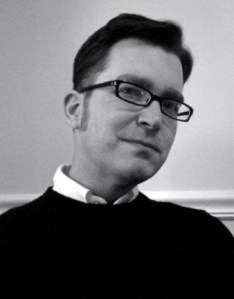
Marc SchusterI first became aware of Marc Schuster’ website and writing several months ago, and his work has quickly become a favorite of mine.  In addition to his wickedly funny website, Abominations, Marc is the author of several books, including The Singular Exploits of Wonder Mom and Party Girl and The Greatest Show in the Galaxy: The Descerning Fans Guide to Doctor Who (with Tom Powers).  His short fiction has appeared in numerous magazines and journals ranging from Weird Tales to Reader’s Digest.  I had a chance to read an advanced copy of his forthcoming novel, The Grievers, and found it to be one of the funniest and most touching books I read in 2011. 

You have a talent for voice, both the in the short form and at novel length.  How do you find and develop a character’s voice?

M.S.:  Most of the time, it’s a matter of tapping into a particular aspect of my own personality and taking it in a new direction.  Usually, it involves looking at my own foibles and figuring out how to turn them into characters, or at least to place them at the heart of specific characters.  My tendency to turn everything into a joke, for example, lent itself nicely to the character of Charley Schwartz in The Grievers, whereas my innate sense of insecurity led to Audrey Corcoran in The Singular Exploits of Wonder Mom and Party Girl.  In terms of my shorter work, my lifelong desire to find a place in the world and be more comfortable with myself fed into the narrator of “My Life as an Abomination.”  I suppose everything starts with insecurity and builds from there.  I’m just channeling it and examining from a new angle with each new project.

You write both short fiction and novels.  Do you prefer one form over the other?  Do you go about the craft of writing short fiction differently than you do novels?  If so, how?

M.S.:  I’m nothing if not long-winded, so I gravitate toward the novel.  I also think the novel gives me more room in which to explore ideas, more opportunities to experiment.  I like to think of the novel as a large canvas, and because the canvas is so large, I can do things in a novel that I can’t in a short story.  Take some time to develop back story, for instance.  Or build more slowly to a climactic moment.  With short fiction, I usually have a beginning, middle, and end in mind when I set off to start the project.  With a novel, I usually just have a premise.  I’ll start with a “what if” scenario, and keep writing—often hitting a multitude of narrative dead-ends—until I reach a satisfying conclusion.  This is probably another reason I prefer novels.  I’m far too disorganized in my approach to writing to craft a tight short story.  Organization is something I impose on a manuscript later in the writing process.  For me, revision is where the real work happens.

You teach writing in college.  What is the most common weakness you see in the stories of aspiring writers, and how do you help them improve it?

M.S.:  One major problem is a tendency toward cliché.  The reason for this, I think, is that many of my students haven’t read much, and a lot of the tropes they pick up are from television.  As a result, their characters are a little thin, and plot lines feel like they’ve been lifted directly from other sources.  The best way to deal with that kind of writing is recommend books and writers that might be in line with what my students are trying to accomplish.  One thing to keep in mind, of course, is that we live in a culture that doesn’t really encourage or value reading.  Within the demographic that my students inhabit, someone who knows what happened on the most recent episode of Keeping up with the Kardashians will do better socially than someone who’s read Lolita.  The most important thing I can do in many cases is to put books in their hands and show them how to turn the pages.  Or at least how to advance from one screen to the next on their e-readers.

Every writer writes differently: some write only after developing extensive outlines (plotters), others write by the seat of their pants (pantsers); some write quickly, others agonize over ever word and comma.  What kind of writer are you?

M.S.:  I’m definitely an agonizer.  In some ways, it puts me at a distinct psychological disadvantage during National Novel Writing Month.  I’ll see my friends post massive word counts—thousands of words a day—and then I’ll look at a sentence I’ve been worrying into oblivion over the course of several hours and start to feel bad about it.  I’m exaggerating a little bit here, but not much.  Some days, I’m happy just to get a few sentences out.  And the big irony of it all is that I’ll frequently end up cutting a majority of the material I agonized over once I start the revision process.

If you could improve one thing about your writing, what would it be?

M.S.:  I’d like to be a more daring writer—to try new things, or to write without worrying about offending people.  To an extent, I think I’m far too polite and perhaps too squeamish as a writer.  I could also stand to be a lot more disciplined in my approach to writing.

Seven Quick Questions (a.k.a. The Lightning Round)

(1) If you could get anyone to write a blurb for one of your books, who would it be?

M.S.:  Elvis Costello.

(2) What’s your favorite speculative fiction trope? 

M.S.:  Talking animals.

(3) Which Doctor is your favorite Doctor?

M.S.Tom Baker.

(4) What software (if any) do you use for your writing?

M.S.:  Microsoft Word.

(5) If you had a chance to ride a Russian rocket into orbit (with the very real risk you might not come back), would you do it?

M.S.:  No. I get nervous when I lean too far back in my chair.

(6) What grammar rule, when broken, bothers you most?

M.S.:  Misplaced apostrophe’s.

(7) Your dog Pete seems have led a secret double life.  What would your secret double life be like if you could have one?

M.S.:  I’d be a standup comedian.

*^*^*^*^*^*

I’d like to thank Marc for being a good sport and sitting for this interview.  For more information about Marc and his fiction, visit his website, Abominations.  Marc’s books are available for purchase or, in the case of the The Grievers, pre-order at Amazon.com.

Also, if you any questions or thoughts to share with Marc about his fiction or writing in general, just leave them as comments on this post.  Marc will be dropping by periodically to respond to comments, and I’m sure he’d like to hear from you.

Posted in Writing | Tagged , , , | 5 Comments

Inspiration: “Still Life Through Water Droplets”

Today, my story “Still Life through Water Droplets” went live online for free reading at Daily Science Fiction.  This story started with a title that popped into my head after reading a review of an art show.  That review contained a picture of a still life, whose actual title I can no longer remember, but it may have been something like “Still Life with Lobster.”  That’s when I noticed that many still life paintings carry a title that’s a variant of “Still Life with/through X” where X is either an unusual or everyday object.  The title “Still Life Through Water Droplets” immediately jumped into my head and wouldn’t leave.

For over a year I tried to find its story, writing and tossing several attempts in which the characters’ lives literally stopped in time.  Eventually I gave up, and worked on other things.  After a while, I came back to the title.  I realized a less literal approach might work better, and Brandon and Odette’s tragic quests finally emerged.

If if you’ve yet to read “Still Life through Water Droplets,” click your way over to Daily Science Fiction—I hope you enjoy it.  While there, be sure to check out some of the other fiction, or better yet subscribe and receive a story-a-day delivered to email inbox.

Posted in Inspiration, Writing | Tagged , | Leave a comment

Why No Arbor Day Resolutions?

I’ve never been into making New Year’s resolutions.  I guess I’ve never seen the point.  I’ve always thought that if I’ve wanted to make a change in my life, why wait until January?  I get the whole “new year-new start” thing, but I know people who will defer a “life changing” resolution until the new year…even if it’s July.

Resolutions made in June or October aren’t any weaker than those made in January, and they may actually be better, because it seems like many New Year’s resolutions are made out of tradition, rather than honest conviction—if you’re willing to wait until the New Year’s, then you’re probably not ready to make a change.  So go ahead and make your New Year’s resolution if you’re truly ready, but don’t be afraid to make Arbor Day resolutions, Summer Solstice resolutions, or Halloween resolutions.  Change is something that shouldn’t be done only once a year; it should be done as needed.

Posted in General News, Goals, Inspiration | 1 Comment

Inspiration: “Observations on a Clock”

Often no single thing, place, or event inspires a complete story.  Stories tend to rise up from a tangle of inspirations, but sometimes a significant story element can be traced to a specific thing.

“Observations on a Clock,” appearing the February 2012 issue of Asimov’s Science Fiction Magazine, has its root inspiration in a call for submissions for a themed anthology.  In the summer of 2010, Dagan Books issued a call for stories about “alien” archeology.  My writing group, Hopefull Monsters, decided to use that theme as a writing prompt, and we brainstormed ideas.  I was interested in exploring alien artifacts that weren’t weapons or miracle devices that would save or necessarily benefit humanity.  I wanted to explore the idea that alien devices were just that: alien.  As such, any attempt of humans to interpret those artifacts would suffer from the “human element.”  How could humans understand something that was truly alien?

Two ideas came out of that brainstorming session.  One developed into my story “Hoodoo,” which was selected for the IN SITU anthology (forthcoming in 2012), and a second developed into the dark “Observations on a Clock,” which I finished after the anthology’s submission deadline.  If you’ve already read “Observations on a Clock,” I hope you enjoyed it.  If you haven’t read it yet, what are you waiting for?  Pick up a copy of the February 2012 Asimov’s today, before they run out!

Posted in Inspiration, Writing | Tagged , | Leave a comment